
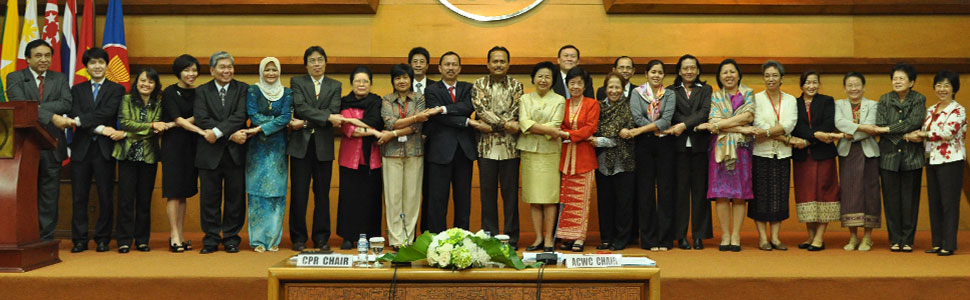
BALI, Indonesia – December 2025: The ASEAN Commission for the Promotion and Protection of the Rights of Women and Children (ACWC), the ASEAN Training Centre for Social Work and Social Welfare (ATCSW) and the UNICEF East Asia and Pacific Regional Office (EAPRO), in close collaboration with the Regional Support Office of the Bali Process convened a Regional Workshop on Protecting Children in the Context of Migration from 8-12 December in Bali, Indonesia. This 4.5-day workshop, with support from the European Union (EU) under the PROTECT project, gathered over 30 social service workers, immigration officials, and child protection experts from across the ASEAN region to strengthen cross-border cooperation and promote safer, more coordinated inter‑sectoral and cross‑border responses for the rights, protection and care of children in the context of migration.
Across the world, global migration continues to rise, driven by economic pressures, conflict, climate change, and humanitarian crises. Children are increasingly affected, particularly those who travel alone, become separated from their families, or fall victim to trafficking. They face heightened risks, including exploitation, detention, violence, and limited access to essential services. In ASEAN, migration remains a defining regional dynamic, with millions of children affected each year. Against this backdrop, countries are intensifying their efforts to build rights-based, gender-sensitive, and child-centred protection systems that is driven by stronger coordination between sectors and across borders.
“The workshop built on this momentum by aligning with the ASEAN Regional Plan of Action on Implementing the ASEAN Declaration on the Rights of Children in the Context of Migration (ASEAN RPA on CCM), which promotes harmonized standards, stronger referral pathways, and safer cross-border collaboration” said ACWC Children’s Rights Representative for Indonesia, Yanti Kusumawardhani. The workshop is further guided by the ASEAN Road Map for the Implementation of the Ha Noi Declaration on Strengthening Social Work Towards Cohesive and Responsive ASEAN Community, which explicitly identifies improved inter‑sectoral work as a key objective. Social service workers and immigration management officials working together is only the first step; at country level, workshops may also include budget holders, educators, health workers, police, and other relevant actors as needed.
“The European Union is proud to support efforts that reinforce national and cross-border capacities to protect children in the context of migration. Empowering frontline professionals is not only an investment in human capital, it is a cornerstone of our approach to safer, more coordinated migration governance across regions,” said Tom Corrie, Head of Cooperation at the Delegation of the European Union in Thailand.
Participants engaged in high-impact technical sessions, micro-simulations, stakeholder mapping, case coordination exercises, and country-level planning discussions. The workshop contributed to:
- Strengthening knowledge and capacity, by enhancing the understanding of international, regional, and national child protection frameworks, including the practical application of the Best Interests of the Child (BIC) principle in migration contexts.
- Improving case management by building capacity to identify, assess, and manage cases involving unaccompanied, separated, trafficked, and vulnerable migrant children using trauma-informed and gender-responsive approaches.
- Fostering multi-sectoral coordination, by introducing standardized identification, referral, and cross-border coordination tools in line with ASEAN RPA focus areas and indicators.
- Developing national roadmaps, by equipping participants with the skills to adapt and cascade the training at the national and local levels throughout 2026, contributing to the institutionalization of sustainable protection mechanisms.
“Across ASEAN, children in the context of migration continue to face risks no child should ever experience. This workshop demonstrates the power of regional solidarity and coordinated action. By strengthening frontline capacities and promoting cross-border cooperation, governments are taking vital steps toward building child-centered, resilient national systems that protect every child on the move. UNICEF is proud to work alongside ASEAN and the European Union in advancing these shared commitments,” said UNICEF Regional Director, June Kunugi.
The workshop underscores shared commitments across ASEAN to strengthen cross-border case management, develop safer, regular mobility pathways, institutionalize sustainable, long‑term protection mechanisms, and expand inter‑sectoral collaboration across social services, immigration, education, health, justice, and law enforcement.
By the end of the workshop, participating countries have come-up with proposed national initiatives to further institutionalise the modules and organise national-level workshops in 2026. These plans will help strengthen coordination, enhance frontline capacities, and ensure that children in the context of migration are better identified, protected, and supported across the region.
This initiative was supported by the European Union-funded project “Ensuring Decent Work and Reducing Vulnerabilities for Women and Children in the Context of Labour Migration in Southeast Asia (PROTECT), jointly implemented by the International Labour Organization (ILO), UN Women, United Nations Children’s Fund (UNICEF), and United Nations Office on Drugs and Crime (UNODC). The project works to strengthen legal frameworks, enhance prevention and protection mechanisms and increase access to information and services for migrant workers and their children across the region.